
Why automation needs different pallets
In a manual warehouse, a forklift driver corrects a crooked or damaged pallet. In an automated system, nobody does. Every deviation in size, weight or flatness can cause a stoppage, an error or damage.
Five properties that count
- Dimensionally stable. An injection-moulded plastic pallet always has the same size. It does not swell or shrink with moisture.
- Constant weight. Important for weighing systems and checks on the line.
- No nails or splinters. Nothing catches on rollers, chains or sensors.
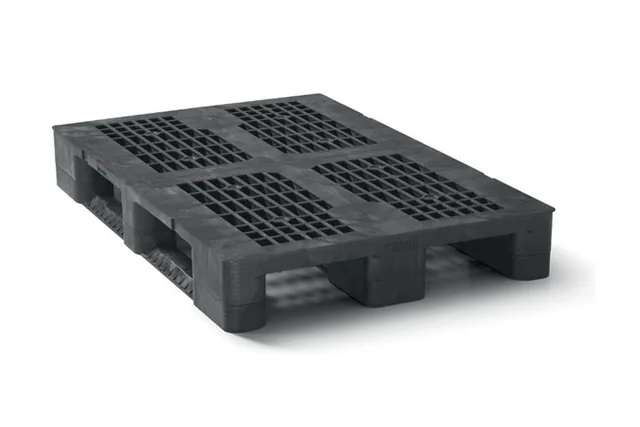
- The right base. For roller and chain conveyors, choose a pallet with runners, like almost all of our heavy pallets: three or six continuous runners give an even running surface. Pallets with feet are less suitable for roller conveyors.
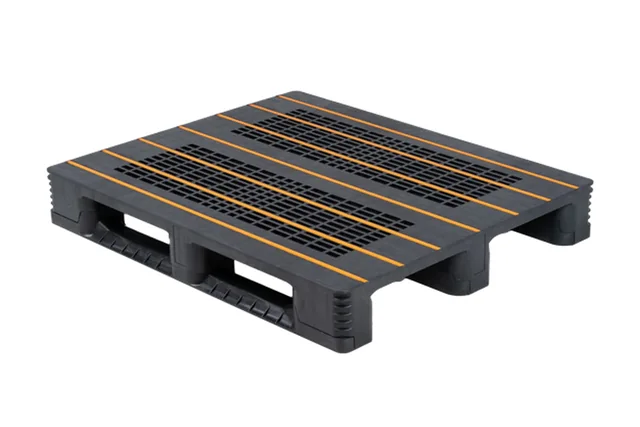
- Anti-slip. An anti-slip deck keeps the load in place when accelerating and braking, so you need less stretch film and can run faster.
Watch the racking load
In a high-bay warehouse, the pallet sits on two beams. So look at the racking load, not the static value. Our heavy pallets carry up to 2,000 kg in racking. Read more about pallet load capacity.
Which pallets suit automation?
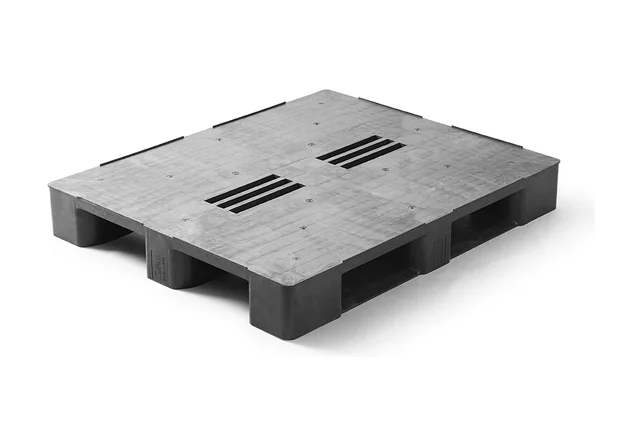
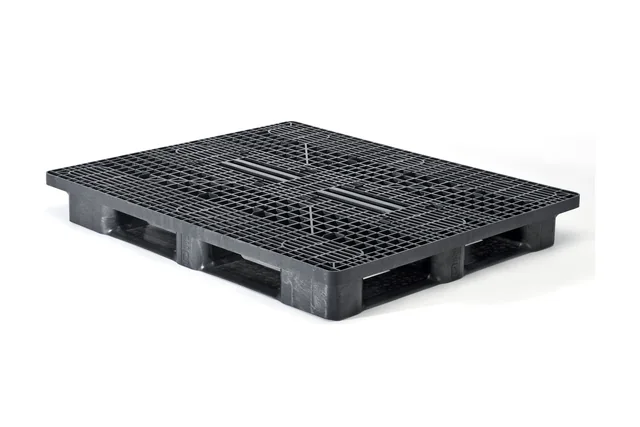
- Heavy pallets on 3 or 6 runners for high-bay storage, cranes and heavy loads.
- Medium pallets with anti-slip for AGVs and fast lines.
- Closed deck when sensors need to ‘see’ the pallet or small products must not sag.
Not sure? Send us the specifications of your system. We recommend a pallet that fits and, if needed, test with sample pallets.