
In short
- HDPE 2 and PE-HD 2 mean the same thing: high-density polyethylene, with plastic code 2.
- The number in the triangle tells you which plastic it is. It does not mean the product is already recycled.
- HDPE is strong and light, does not absorb moisture and resists many chemicals.
- It is one of the most recyclable plastics. At home it belongs with your plastic packaging waste.
- Our standard pallets are made from recycled plastic, a mix of HDPE and PP.
What does HDPE 2 or PE-HD 2 mean?
HDPE stands for high-density polyethylene. PE-HD is the same plastic, written in the international ISO notation for plastics. On packaging and products you will see both forms, sometimes with a hash sign: PE-HD #2.
The number 2 is an identification code. The six most common plastics have the codes 1 to 6, and code 7 covers all other plastics. This lets everyone in the chain, from consumer to recycler, see which material they are dealing with. In Europe, these codes for packaging are laid down in Commission Decision 97/129/EC.
Note: here the triangle of arrows is only a recognition mark. A 2 in the triangle does not automatically mean the product is made from recycled material. If it says "recycled PE-HD" or "rHDPE", it is.
The seven plastic codes at a glance
| Code | Abbreviation | Plastic | Examples |
|---|---|---|---|
| 1 | PET | Polyethylene terephthalate | Drinks bottles, food trays |
| 2 | HDPE | High-density polyethylene (PE-HD) | Milk bottles, detergent bottles, caps, crates, pallets |
| 3 | PVC | Polyvinyl chloride | Pipes, window frames, some films |
| 4 | LDPE | Low-density polyethylene (PE-LD) | Films, bags, squeeze bottles |
| 5 | PP | Polypropylene | Tubs, buckets, caps, crates |
| 6 | PS | Polystyrene | Cups, expanded polystyrene |
| 7 | O | Other plastics and combinations | Polycarbonate, multilayer packaging |
HDPE (2) and PP (5) are related: both are polyolefins. They behave similarly in recycling and are often processed together.
Properties of HDPE
HDPE is a thermoplastic. It softens when heated and hardens when it cools, and that can be repeated again and again. That is why it is so easy to recycle. The main properties:
- Strong and impact resistant. HDPE is stiff and tough, and stays that way at freezing temperatures.
- Light. Its density is around 0.94 to 0.97 g/cm³. That is lower than water, so HDPE floats.
- Does not absorb moisture. No mould, rot or odour, and easy to clean.
- Chemically resistant. Resists many acids, alkalis and solvents.
- No plasticisers needed. HDPE is rigid by nature and contains no phthalates or BPA.
- Suitable outdoors. With UV stabilisers it can be used in the open air.
Where do you find HDPE 2?
HDPE is one of the most widely used plastics in the world. You will find it in:
- milk bottles, bottles for detergent and shampoo, caps
- jerrycans, drums and packaging for chemicals
- crates, storage boxes and plastic pallets
- water and gas pipes
- wheelie bins, chopping boards and toys
Is HDPE 2 safe?
HDPE is considered a safe plastic. It contains no plasticisers and no bisphenol A (BPA). That is why new (virgin) HDPE is widely used for milk bottles and other food packaging.
Strict European rules apply to materials that come into direct contact with food. Recycled HDPE may only be used for this if the recycling process has been authorised for that purpose. Our recycled plastic pallets are not intended for direct food contact. Our hygienic pallets are made of virgin plastic. Looking for a pallet for direct food contact? Contact us and we will be happy to advise you.
How is HDPE recycled?
HDPE is one of the most recyclable plastics. The process in brief:
- Collection. Through plastic packaging waste or commercial waste.
- Sorting. Machines identify the type of plastic, among other things with infrared light.
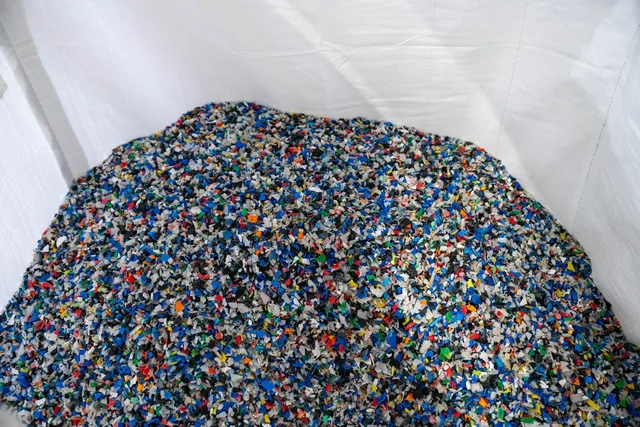
- Grinding and washing. The material is ground into flakes and cleaned.
- Separation. HDPE floats in water; heavier plastics such as PET and PVC sink.
- Regranulation. The flakes are melted and turned into new pellets.
Those pellets are used to make new products. HDPE can be recycled several times. The material changes slightly with each cycle, so recyclers and manufacturers carefully match the recycled material to the application.
Where do you dispose of HDPE 2?
At home, HDPE 2 belongs with your plastic packaging waste, in the bin or bag for plastics that your local authority provides. Empty bottles and containers first. The rules differ from place to place, so if in doubt, check your local council's website.
Plastic pallets do not belong in household waste. They are collected commercially and, as we do, ground into raw material for new pallets.
Recycled HDPE in plastic pallets
Our standard pallets are made from recycled plastic: a mix of HDPE and PP from waste streams such as crates, caps and packaging. Working with recycled material takes a lot of know-how, because it behaves differently from new plastic. We have been building that know-how since 2005.
What it means for you:
- Long service life. A plastic pallet lasts for many years, much longer than an average wooden pallet.
- Hygienic and consistent. No splinters, no moisture, and every pallet has the same weight and the same dimensions.
- No ISPM 15. Plastic pallets fall outside the rules for wooden packaging material when you export.
- Closed loop. At the end of its life, we grind a pallet back into raw material.
Read more about our approach on our sustainability page, about the new European packaging rules in PPWR and plastic pallets, or go straight to all plastic pallets.