In short
- Global supply chains have become vulnerable due to conflicts, disrupted trade routes and fluctuating freight rates.
- Reporting rules increasingly require insight into emissions in the supply chain (scope 3).
- Q-Pall produces in six factories spread across Europe, close to its customers.
- Local production means short, reliable lead times, more stable costs and an honest story about origin and recycling.
The vulnerability of the 'global factory'
For decades the logic was simple: produce where wages are lowest. Offshoring was the standard for cutting costs. Recent events have painfully exposed the hidden costs of that model. Supply chain managers now face a combination of factors that calls for a different sourcing strategy.
Geopolitical unrest
Conflicts such as the war in Ukraine and tensions around key trade routes like the Red Sea cause unpredictable delays. A route that was safe yesterday can be uninsurable today. Companies that depend on imports see lead times slip and margins evaporate due to higher transport and insurance costs.
More transparency in the chain
Regulation also plays an ever larger role. Large companies must be increasingly able to account for where their products come from and what their environmental impact is, including the emissions in their supply chain (scope 3). A logistics item such as a pallet that has crossed half the world fits poorly with that.
The Q-Pall model: producing close to the customer
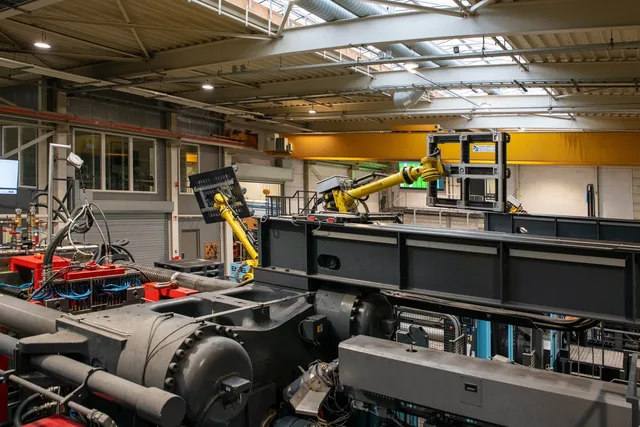
At Q-Pall we do not see production as a cost item, but as a tool for supply security. We deliberately chose nearshoring. We produce in six factories spread across Europe, so almost every customer is within 600 kilometres of a Q-Pall factory. That way there is no single point of failure.
This works differently from long-distance imports. Intercontinental sea freight is prone to weeks of delay. Our network can switch and deliver within a few days, without depending on a single port or route.
In practice, local production means you no longer need to build buffers for uncertainty. You reduce your working capital, because lead times are short and reliable.
A regional approach also keeps prices more stable. Container rates move with global demand, but local transport costs remain fairly predictable. For the finance director that means less volatility in purchasing, for the supply chain manager peace of mind in operations.
Circularity as a hard KPI
Local production also gives control over the raw material flow: the chain of custody. That is essential for companies that take their ESG goals seriously and want to avoid greenwashing.
Our pallets are made from recycled plastic, a mix of HDPE (code 2) and PP. You can read more about that material in recycled PE-HD 2: what is it exactly? Because we source the recycled material close to home, we have direct insight into its quality and origin. Waste is not shipped halfway around the world before it gets a new life. Local waste becomes a local raw material and a local product.
The result is a pallet that is technically strong (impact resistant, weatherproof and hygienic) and that tells an honest story in your sustainability report. At the end of its life, the pallet is fully recyclable, within the same regional chain.
The future is regional
In a world that changes faster and faster, companies need to look ahead instead of react. Local production is not a buzzword, but a structural choice for resilience, sustainability and competitiveness. The focus shifts from the lowest price per unit to the lowest risk and the highest value for the chain.
Would you like to know what switching to locally produced plastic pallets means for your TCO and ESG performance? Contact us and we will gladly work it out with you.