
The comparison
| Plastic pallet | Wooden pallet | |
|---|---|---|
| Service life | Many years, even with intensive use | Shorter, often needs repair |
| Hygiene | Does not absorb moisture, easy to clean | Porous, can go mouldy |
| Splinters and nails | None | Yes, risk of damage |
| Dimensions and weight | Constant | Variable, especially when damp |
| Export (ISPM 15) | Exempt | Heat treatment and stamp required |
| Automation | Highly suitable | Higher risk of breakdowns |
| Purchase price | Higher | Lower |
| Cost per trip | Often lower | Often higher |
| End of life | Fully recyclable | Incinerated or shredded |
When should you choose plastic?
- Closed loops and pools, where pallets come back frequently.
- Hygiene-sensitive sectors such as food and pharmaceuticals.
- Automated warehouses with roller conveyors, cranes and AGVs.
- Export, because you do not need to arrange ISPM 15 treatment. See ISPM 15.
- Wet or cold environments, such as freezer rooms and outdoor storage.
When is wood still an option?
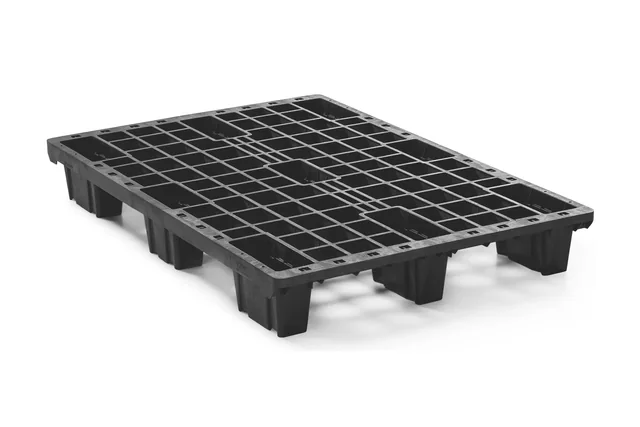
For one-way shipments within Europe where the pallet is part of an exchange system, a wooden EPAL pallet is often fine. For one-way export, however, a light nestable plastic pallet is a strong alternative, because it needs no treatment and weighs little.
The calculation
A fair comparison is made in cost per trip. Add in damage to loads and machinery, repair costs, line downtime and the cost of ISPM 15 treatment for export. In many cases, plastic then comes out as the most economical option. See the current plastic pallet prices.