
Step 1: determine the size
Start with your load and your process. What size are your boxes, bags or drums? And which sizes fit your racking, trucks and containers? In Europe, 1200 x 800 mm is the standard. In industry and in the United Kingdom, 1200 x 1000 mm is common. For sea containers, 1100 x 1100 and 760 x 1140 mm are practical. Big bags and drums are best placed on 1140 x 1140 or 1200 x 1200 mm. Not sure? Our overview of pallet sizes lists them all.
Step 2: weigh your heaviest load
Every pallet has three load values. Look at the value that matches your use:
- Static: storage on the floor and block stacking.
- Dynamic: moving with a forklift, pallet truck or roller conveyor.
- Racking: storage in pallet racking without shelves.
Always allow some margin and take unevenly distributed loads into account. Read more about pallet loads.
Step 3: choose the load class
| Class | Typical use | Racking |
|---|---|---|
| Light | Export, one-way shipments, floor storage | No |
| Medium | Internal transport, distribution, light racking storage | Yes, depending on model |
| Heavy | Intensive use, pools, heavy racking storage | Yes, up to 2,000 kg |
Step 4: open or closed deck
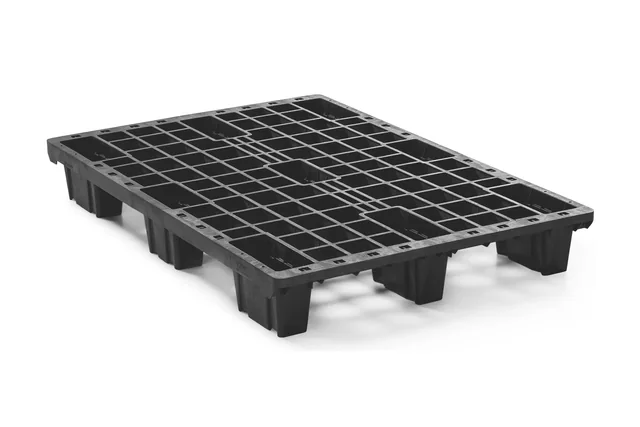
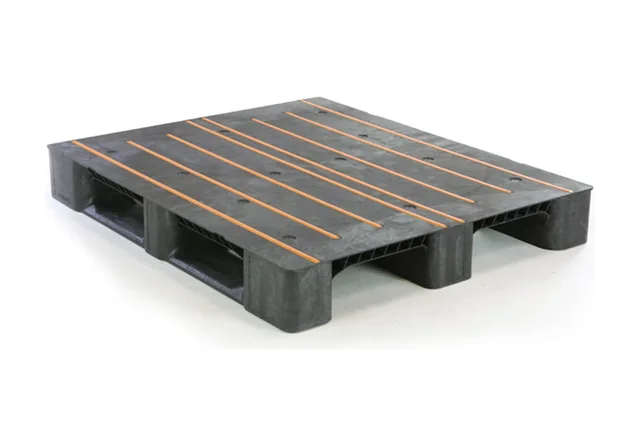
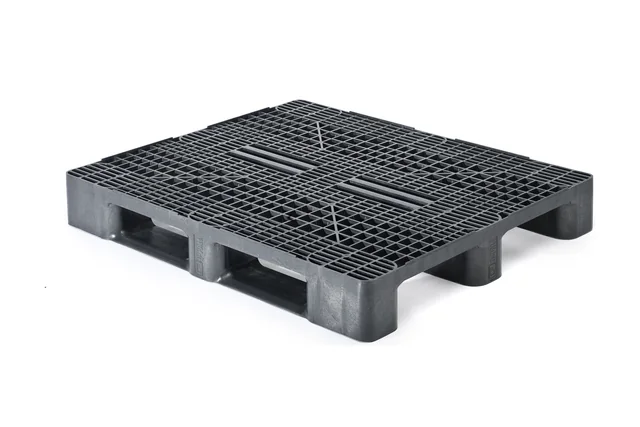
An open deck is lighter and cheaper. Moisture drains away and air can circulate, which is useful for cooling or for products that need to dry. A closed deck is flat and solid. Small packages cannot fall through and it is easy to clean. That is important in the food and pharmaceutical industries. For extra grip, choose an anti-slip deck.
Step 5: feet or runners
- 9 feet: light, often nestable and accessible from four sides by forklift and pallet truck. Ideal for export.
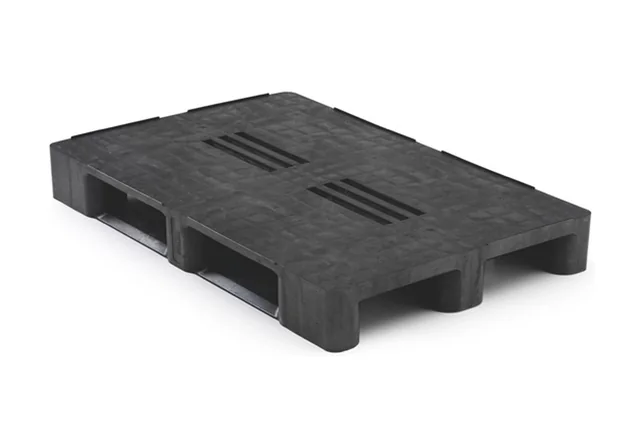
- 3 runners: stable on the floor, on roller conveyors and in pallet racking.
- 5 or 6 runners: even more support and a more even load distribution. With 6 runners (perimeter base), the underside is closed all round.
Want a nestable pallet that becomes more stable on site? Then use click-on runners.
Step 6: think about the entire service life
Will the pallet come back? Then a heavier pallet that lasts many trips pays off. Is it a one-way trip? Then a light nestable pallet is the most economical. Also consider extras: a logo or your own colour (see custom solutions), pallet collars and lids, or used pallets if budget matters.
Need help?
Our specialists are happy to help. Tell us what you transport, how you store it and how many pallets you need. We will then recommend the model that suits you best. Request a quote or contact us.