Why the PPWR matters
- Reusability: packaging must be designed for reuse.
- Recyclability: packaging must be fully recyclable (minimum grade B).
- Minimum recycled content: packaging must consist partly of recycled materials.
What is grade B recyclability?
Grade B means that a package can, under standard collection, sorting, and recycling conditions, be processed into recyclate suitable for use in new products. Grade A is optimal (closed-loop possible), grade B is highly recyclable with minimal quality loss.
This will especially impact transport packaging such as pallets, crates, and industrial containers. Although often invisible to consumers, these products represent a substantial material volume.
What will change—and when
The PPWR introduces binding targets and deadlines through to 2040. Key milestones:
As of August 12, 2026
- PPWR applies across the entire EU.
As of January 1, 2030
- All transport packaging must be at least grade B recyclable.
- B2B packaging within one member state or between company sites must be 100% reusable.
- All transport packaging must be 40% reusable.
- Plastic packaging must contain 10–35% recycled material (depending on the type).
As of January 1, 2040
- 70% reusability for all transport packaging.
- 25–65% recycled content required.
What does this mean for pallets?
Pallets are often the backbone of B2B logistics—yet rarely viewed strategically. That needs to change.
- Wooden pallets are harder to recycle, can cause splinters or contamination, and are not circular unless part of a tightly controlled pool system.
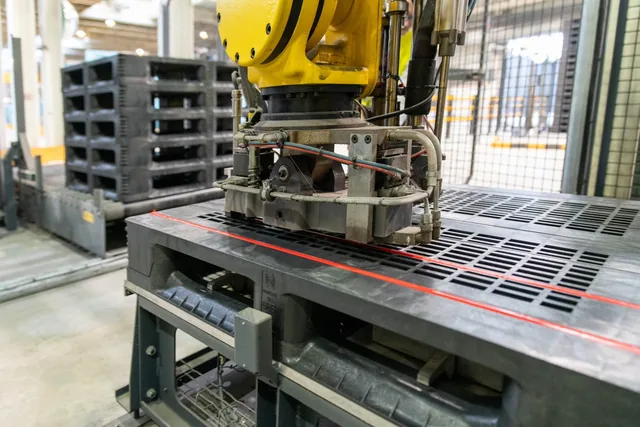
- Plastic pallets made from recycled material, like those from Q-Pall, already meet many PPWR requirements: they are hygienic, reusable, fully recyclable (grade A or B), and made from recycled plastics (RIC code 2).
Strategic lever
For C-level executives, operations managers, and procurement professionals, this is a moment of opportunity. Pallets are no longer a commodity but a lever for:
- Cost savings on Total Cost of Ownership
- Sustainability gains in reporting and KPIs
- Brand positioning as an ESG innovator
By investing now in the right type of transport packaging, you not only ensure compliance—you leverage the PPWR as a driver for sustainable transformation.
Conclusion: the time to switch is now
The PPWR sends a clear message: those who don’t adapt will fall behind. But those who anticipate will reap the benefits. Transport packaging such as pallets is no longer an afterthought, but a strategic starting point.